
In today’s kind of competitive business world, keeping existing customers is often more cost-effective than going out and grabbing totally new ones. If an organization can notice churn earlier, it can act first, rather than sitting and waiting then reacting a bit late, and in general customer satisfaction gets a stronger push. In this project, we build a machine learning system for customer churn prediction, it flags customers who are more likely to leave a service , by looking at their behaviour signals, how they actually use the service, demographic details, and also account related information. The whole workflow starts with data prepossessing, where we clean up and reorganize the dataset , then we do exploratory data analysis, just to get a better feel for customer behaviour and uncover patterns that might otherwise remain kind of unnoticed. After that, several machine learning classification algorithms are trained and tested, so we can choose the model that produces the most accurate and dependable churn forecasts. For performance checking we rely on familiar evaluation metrics like accuracy, precision, recall, F1-score, and ROC-AUC, which makes comparing results simpler and lowers the “it just seems better” bias. To avoid that “black box” feeling during prediction, the system also uses SHAP (SHapley Additive exPlanations). SHAP kind of helps interpret what each variable is contributing, by showing how different features shift the churn outcome for each individual customer.

With the growing density of the population, traffic congestion, and changing conditions of disasters...
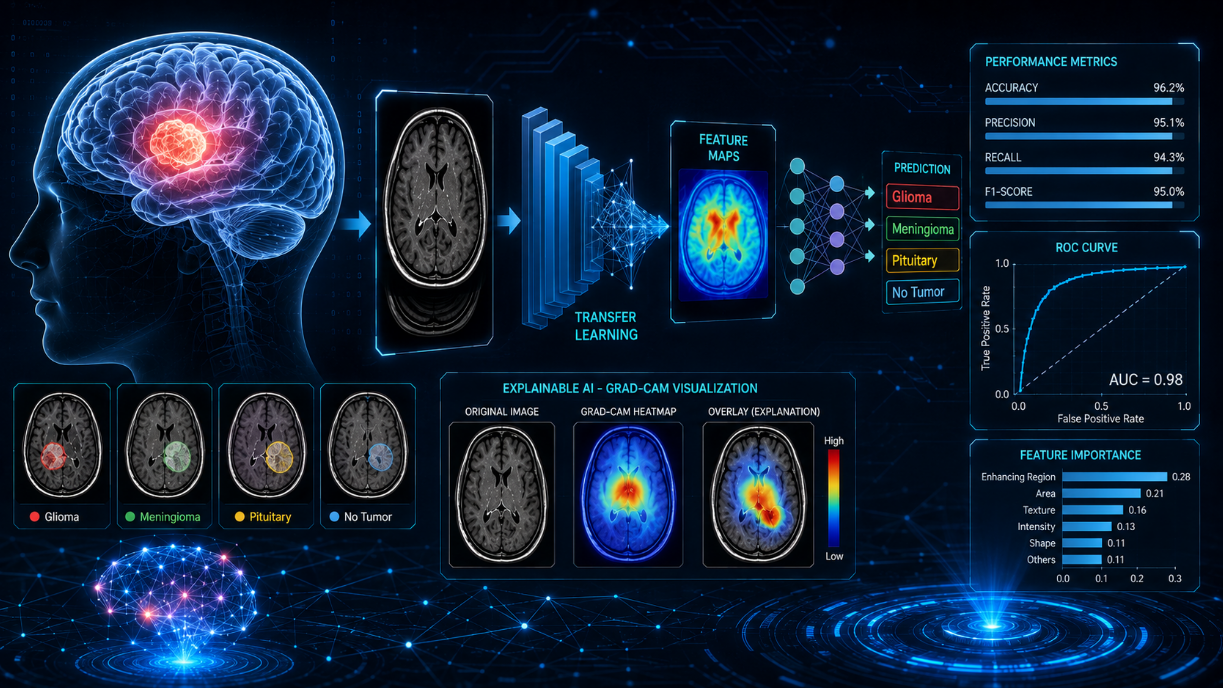
Brain tumours are among the most deadly cancers and require timely and accurate diagnosis to decide ...
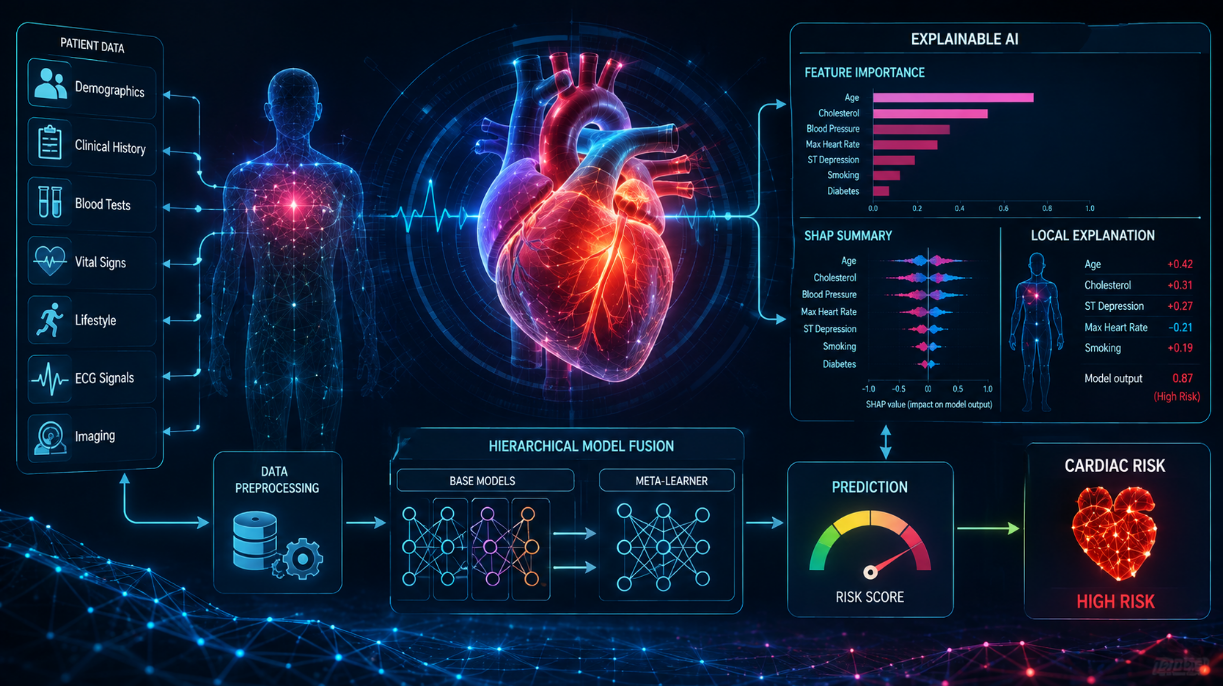
An epidemic survey of recent years has reached a conclusion that virtually 17.9 million lives are lo...

Despite the dynamic nature of the market, large dimensionalities of asset space and varieties of fin...